How NGOs Can Plan Interpreting for Field Missions Well.
22 September, 2026· Article by Maria Jones


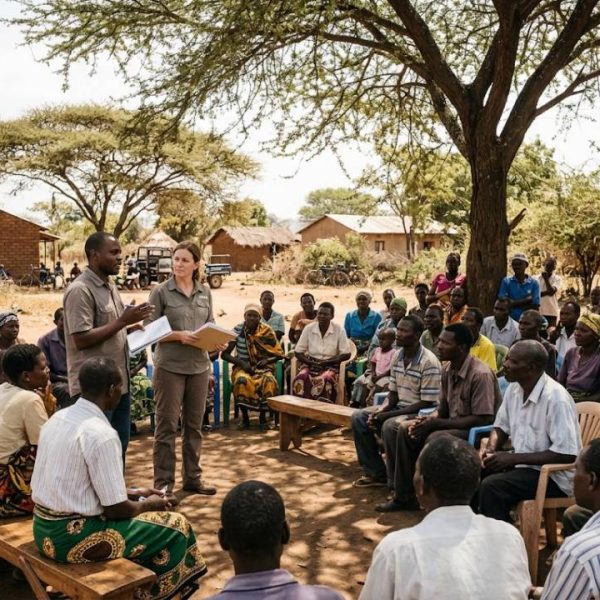
Humanitarian and development work runs on conversations. A health worker explaining a vaccination schedule, a protection officer listening to a family's account, a project manager negotiating access with local authorities. When those conversations cross a language barrier, the interpreter becomes the most important person in the room.
Yet interpreting is often arranged at the last minute, with whoever happens to speak both languages. Good intentions do not replace trained interpreters, and the people you serve deserve to be understood accurately.
Why ad hoc interpreting causes problems
Asking a driver, a local staff member or a community volunteer to interpret is tempting. They are available, they know the area and they cost nothing extra. The trouble is that interpreting is a skill, not just bilingualism.
Untrained interpreters tend to summarise rather than render everything. They may soften difficult messages, add their own opinions or leave out details they consider unimportant. In sensitive settings they may also be known to the person speaking, which can make that person hold back. None of this is malicious, but each habit distorts the message.
Matching the interpreting mode to the setting
Different situations call for different approaches. Knowing the options helps you brief your provider clearly:
- Consecutive interpreting works well for interviews, small meetings and community consultations. The speaker pauses, the interpreter renders the segment.
- Simultaneous interpreting suits conferences and large workshops where time matters. It usually requires booths or portable equipment and a team of at least two interpreters.
- Whispered interpreting helps one or two delegates follow a meeting held in another language.
- Remote interpreting by phone or video connects field teams with interpreters elsewhere, useful for rare languages or short calls.
The professional standards behind these modes are well documented by the International Association of Conference Interpreters, which is a good reference when you want to understand working conditions and team sizes.
Rare languages and regional dialects
Many NGOs work with communities whose languages are poorly served by commercial agencies. Tigrinya, Pashto, Rohingya, Fulfulde, Kurdish dialects and many others can be hard to source at short notice. Planning ahead matters here more than anywhere else.
Ask your provider early which languages and dialects they can cover, and whether the interpreter is familiar with the specific region. A Kurdish interpreter who speaks Sorani may struggle with a Kurmanji speaker. The same applies to Arabic varieties, where a Gulf interpreter and a Sudanese interviewee may need extra time to understand each other.
Briefing interpreters properly
Interpreters perform best when they know what is coming. A short briefing before the session makes a noticeable difference. Share the purpose of the meeting, the key terms, any acronyms your organisation uses, and names of people and places that will come up.
For medical, legal or protection contexts, share relevant terminology lists in advance. An interpreter who has looked up terms for gender based violence referral pathways or asylum procedures will be far more precise than one hearing them for the first time.
Treat the interpreter as part of the team, not as equipment. Introduce them, explain their role to participants, and give them breaks during long sessions.
Spoken interpreting covers the conversation, but asylum and protection cases also generate documents that need formal translation. Professional immigration translation services render birth certificates, witness statements and medical reports with the accuracy these cases demand. Interpreters and translators play different roles, and both protect the integrity of a person's case. Planning for both from the start avoids delays when deadlines are tight.
Confidentiality and neutrality
Professional interpreters follow codes of ethics that require confidentiality, impartiality and accuracy. These principles matter enormously when interviewing survivors, refugees or witnesses. Make sure your interpreters sign confidentiality agreements and understand your safeguarding policy.
Consider also the interpreter's identity. In some contexts, gender, ethnicity or religion affect whether a person feels safe speaking. Offering a female interpreter for interviews with women is often more than a courtesy; it can determine whether someone shares their story at all.
Working with a professional provider
When budgets allow, partnering with an agency that offers professional interpreting services takes much of the logistical burden off programme staff. A good provider vets interpreters, checks language competence, handles contracts and can offer remote backup if a field interpreter falls ill.
Ask potential partners about their experience in humanitarian settings, their screening process and how they handle urgent requests. Clarify payment terms, travel arrangements and security protocols for field deployments before the first mission, not during it.
Making remote interpreting work in the field
Connectivity in field locations is unpredictable, so test the setup before an important call. A simple speakerphone in a quiet room often works better than an unstable video link. Keep a backup number and agree on what to do if the line drops.
Remote interpreting also changes the dynamics of a conversation. Without visual cues, the interpreter needs speakers to talk one at a time and to keep their segments short. A quick reminder at the start of each call saves frustration later.
Budgeting realistically
Interpreting is often missing from proposals, then squeezed out of programme budgets. Including it as a dedicated line from the start, with daily rates, travel and remote minutes, protects both quality and the people you serve. Donors increasingly expect accountability to affected populations, and clear communication in their language is a basic part of that.
Being heard is part of the help
For many people receiving assistance, the conversation with an aid worker is one of the few moments when their needs are recorded and acted upon. A trained interpreter makes sure their words arrive intact. That is not a luxury. It is part of doing the work properly.
Recent Posts
Ukrainisch im Behördenalltag,...
Services publics et usagers al...
Arabic Translation Services fo...

How Agencies Compare Translati...

Traduzione in Arabo per Aziend...
Traduzione in Italiano di Vide...
Share it.

Links
We use cookies
We use cookies to give you the best online experience, remember your preferences, and understand how the site is used. You can accept all cookies, reject optional ones, or choose which categories to allow.
Privacy PolicyCookie preferences
Choose which cookies we can use. Necessary cookies stay on because the site cannot work without them.
For more details, read our Privacy Policy.